History · 2026-07-08 · By Spud
A short history of Test cricket
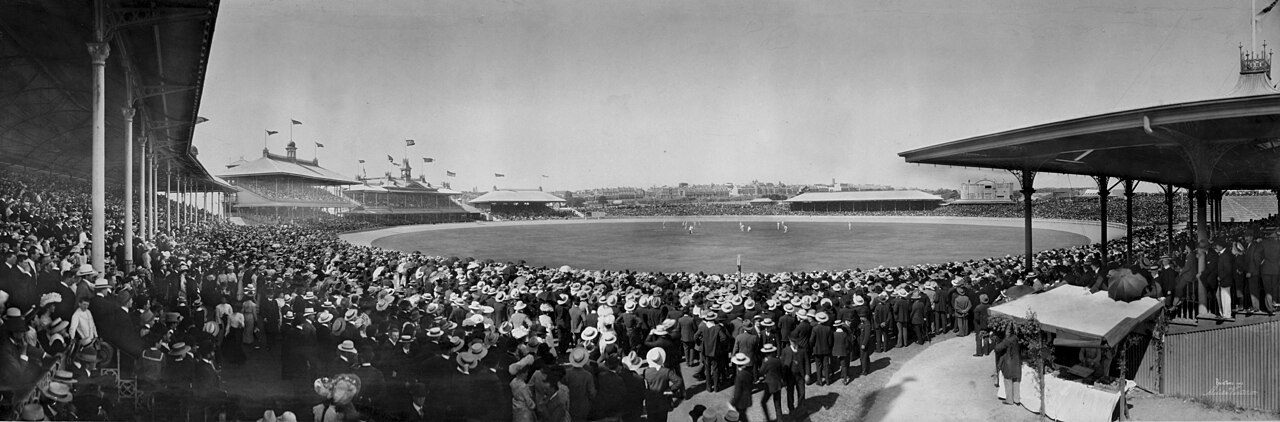
Test cricket is the oldest form of international cricket and, to many, the truest. Played over five days, demanding patience, stamina and nerve in equal measure, it is often called the ultimate format — the one against which a cricketer's greatness is finally measured. Its story stretches back to the nineteenth century, and following it is a fine way to understand how the whole sport came to be.
The first Test
International cricket has a clear starting point. The first Test match was played between Australia and England in 1877. Two national sides met in a multi-day contest, and although nobody at the time used the word "Test" in its modern sense, that fixture is now recognised as the beginning of international cricket as we know it.
What is striking is how early this was. The first Test predates almost every other feature of the modern game — the World Cup, one-day cricket, floodlights, the franchise leagues. For nearly a century, Test cricket and the shorter matches around it were essentially the whole of top-level cricket. Everything else grew up much later, on foundations the five-day game had already laid.
Why it is called a "Test"
The name itself tells you something about the format's character. A Test match was so called because it was seen as the supreme test of a cricketing nation and its players — a contest long enough and hard enough to expose any weakness. Over five days, with each side usually batting twice, there is nowhere to hide. Technique, temperament, fitness and tactics are all examined at length.
This is the heart of the format's enduring prestige. A batter cannot simply survive a spell of hostile bowling; he may have to survive session after session across days. A bowler cannot rely on a single burst; he must keep coming back, hour after hour, in changing conditions. The length of a Test is not a flaw to be tolerated but the very source of its depth. It tests everything, which is exactly why it earned the name.
The early spread of the game
For its first decades, Test cricket was largely a contest between England and Australia, the two countries where the international game began. Their rivalry — later crystallised in the Ashes — set the early standard and drew huge public interest. But cricket was carried around the world, and gradually other nations joined the Test arena.
Over the years, more countries were admitted to the highest level of the game, each earning the status of a Test-playing nation. South Africa, the West Indies, New Zealand, India, Pakistan and others in time took their place, and the roster of Test nations grew steadily across the twentieth century. Each new entrant brought its own conditions, its own style and its own great players, enriching the format and turning it into a genuinely global competition rather than a private duel between two countries.
What makes Test cricket distinctive
Several features set the five-day game apart from every shorter format, and together they give it its unique texture.
- The draw. Uniquely among the major formats, a Test can end without a winner. If neither side can force a result in the allotted days, the match is drawn. This makes survival a legitimate goal — a team batting to save a match may bat for a whole day with no thought of winning, only of not losing.
- Two innings a side. Each team usually bats twice, which allows a match to swing dramatically. A side can fall badly behind in the first innings and still fight its way back, giving the format a slow, unfolding drama the short game cannot match.
- Changing conditions. Over five days a pitch wears and changes, cracking open and beginning to help the spinners. Reading how a surface will behave late in a match, and choosing when to bat and when to bowl, is a captain's art.
- The red ball and whites. Test cricket is traditionally played in white clothing with a red ball, in daylight, a look that has come to symbolise the format's dignity and tradition.
The rhythm of a five-day match
Part of what newcomers find hard about Test cricket, and part of what devotees love, is its rhythm. A Test is not a sprint but a campaign, played out in sessions across days, with the balance of power shifting back and forth. A morning of watchful batting can lay the platform for an afternoon of acceleration; a single spell of inspired bowling can turn a match on its head; a last-day run chase can build almost unbearable tension over hours.
This slow-burning quality rewards the patient viewer. A batter blocking defensively on the final evening is not being dull; he may be fighting to save his side from defeat, ball by ball. A captain setting an unusual field is playing a long game, setting a trap that may not spring for an hour. Once you learn to read these rhythms, the apparent slowness of Test cricket resolves into one of the most absorbing contests in all of sport.
Innovations along the way
For all its reputation as the traditional format, Test cricket has not stood entirely still. The game's authorities have made changes over the years to keep the five-day match healthy and appealing, while guarding its essential character.
One notable innovation has been the day-night Test, played with a pink ball rather than the traditional red so that matches can extend into the evening and draw larger crowds after working hours. There have also been efforts to give Test series greater context and meaning, so that individual matches feel part of a larger competition rather than isolated fixtures. Playing conditions, over rates and the technology used to adjudicate decisions have all evolved too. The aim throughout has been the same: to preserve what makes Test cricket special while helping it hold its place in a crowded, fast-moving sporting world.
The challenge of the modern era
Test cricket today faces genuine pressures. The rise of Twenty20 and the franchise leagues has given players lucrative alternatives and offered fans a faster, more compact form of entertainment. Crowded calendars force difficult choices, and there are real questions about how a five-day format fits into a world that increasingly prizes speed and brevity.
Yet Test cricket endures, and its standing among players and serious followers remains extraordinarily high. Ask most cricketers what they most want to achieve, and performing in Test matches — a century against a great attack, a match-winning spell on an unhelpful pitch — sits near the top. The format's very difficulty is its protection: precisely because it demands so much, success in it means so much. The short formats may draw the biggest crowds, but the five-day game still confers the deepest respect.
Why it remains the ultimate format
More than a century after that first match between Australia and England, Test cricket retains a unique place in the game. It is the format in which reputations are truly made, where the full range of a cricketer's skill and character is laid bare over days rather than hours. It has spread from two nations to many, absorbed innovations without losing its soul, and survived the arrival of faster, flashier rivals.
For those willing to give it time, Test cricket offers a richness no other format can match — a contest of patience and pressure, strategy and stamina, played out over five days to a conclusion that may be glorious victory, narrow defeat, or a hard-earned draw. That depth is why, for so many, it remains the ultimate test of the game.
If tracing the long careers and famous names of the Test game appeals to you, crickedle turns that history into a daily puzzle. Try the Career Trail mode to follow players through the teams they represented, or explore the crickedle blog for more cricket history. A short daily guess is a fine way to keep the game's great stories close — start playing today.
How Test cricket evolved
Test cricket has never stood still. The earliest matches were timeless — played to a finish however long it took — until the impracticality of games stretching towards a second week pushed the sport toward the modern five-day limit. Over the decades the game absorbed one revolution after another: the covering of pitches, restrictions on intimidatory short bowling, the arrival of neutral umpires, and eventually television replays and the Decision Review System, which changed how close calls are judged.
The balance between bat and ball has shifted too. Uncovered pitches once made batting treacherous after rain; modern groundskeeping and bigger bats have tilted things toward the batter, prompting authorities to tinker with the ball and the rules to keep the contest fair. Through all of it, the essential shape of the format — two innings each, the new ball, the follow-on, the draw as a genuine result — has endured, which is why a match from decades ago is still recognisably the same game.
Test cricket in the modern era
For years people have predicted the death of the five-day game, squeezed by shorter, richer formats. Yet Test cricket has proved stubbornly resilient. The introduction of a World Test Championship gave the format a points structure and a final to play for, adding context to bilateral series that once existed in isolation. Day-night Tests with a pink ball have brought crowds back under floodlights. And the format retains something the shorter games cannot replicate: the slow accumulation of pressure across sessions, the chance for a match to swing four or five times, and a difficulty that still marks Test success as the truest measure of a cricketer. It is the format against which the greats are ultimately judged.
Fancy a challenge? crickedle is a free daily cricket guessing game with six modes — a new puzzle every day.
Play today's puzzle →