Grounds · 2026-05-23 · Updated 2026-07-13 · By Spud
The MCG: a guide to the Melbourne Cricket Ground
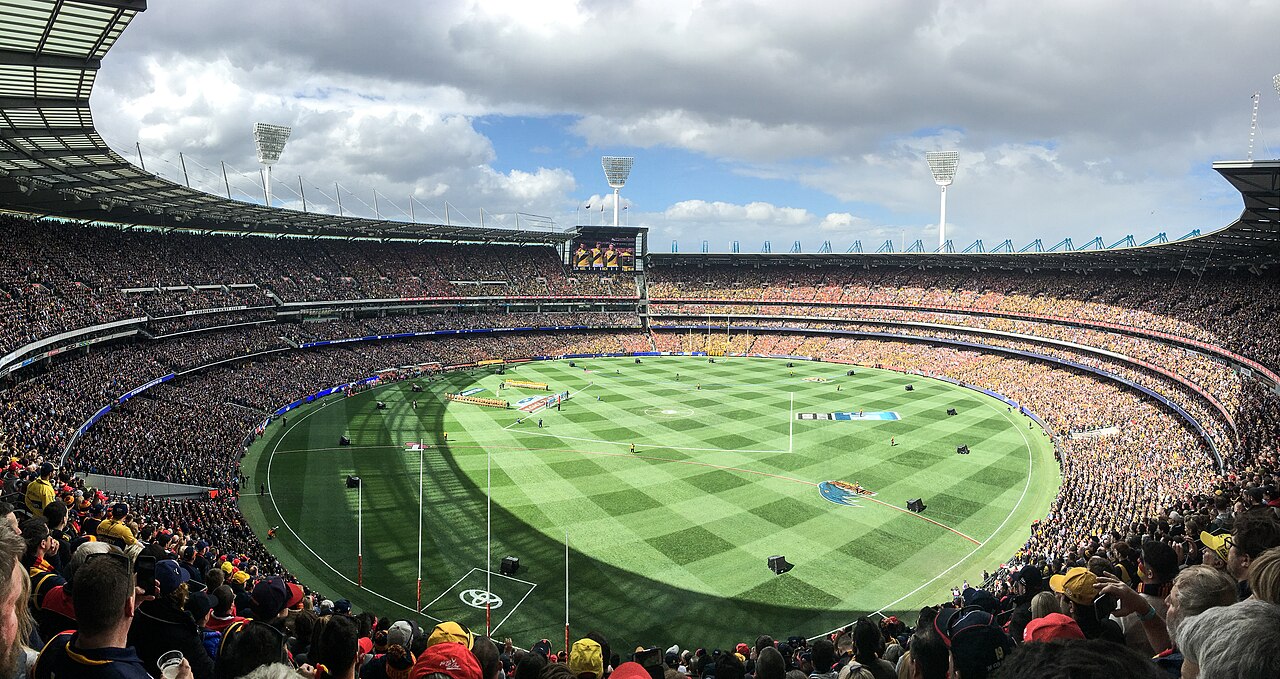
If Lord's is the home of cricket, the Melbourne Cricket Ground is its grandest colosseum. Known to everyone simply as the MCG or "the G", it is the largest stadium in the southern hemisphere and one of the most storied sporting venues anywhere in the world. On the right day it can hold close to a hundred thousand people, and when it is full the noise rolls down from the towering stands like weather.
A stadium on a giant scale
The first thing that strikes a visitor is the sheer size. The stands rise steeply on every side, wrapping the playing area in a near-perfect bowl, so that a batter standing in the middle is ringed by tens of thousands of faces. The boundaries are long, which rewards running between the wickets and makes a six over the straight fences a genuine feat of power. Fast outfields and big square boundaries have shaped the way the ground plays for generations.
The MCG is not only a cricket ground. For half the year it is the spiritual home of Australian Rules football, and that dual life gives it an enormous, year-round membership and a stadium built to a scale most cricket-only grounds never reach.
The Boxing Day Test
No date defines the MCG like the 26th of December. The Boxing Day Test is one of the great fixtures of the cricket calendar, an annual ritual that draws vast first-day crowds and the full attention of the Australian summer. Families come together, the city empties towards the ground, and a big opening-day attendance at the MCG is one of the largest single-day crowds the sport ever produces.
For players, walking out on Boxing Day is a career highlight. The wall of sound when a wicket falls, the long shadows of a Melbourne evening, and the sense of an entire nation watching make it an occasion that lives long in the memory. Visiting teams know that surviving the first session on Boxing Day, in front of that crowd, is as much a test of nerve as of technique.
Birthplace of two formats
The MCG's history reaches back to the very beginnings of international cricket. It hosted the first-ever Test match, between Australia and England in 1877, and — less famously — the first one-day international, in 1971, giving the ground a claim to be the birthplace of two formats. It has staged cricket of every kind in the century and a half since, been an Olympic stadium, and hosted countless football finals, which means its history is woven into the wider story of Australian sport, not just cricket.
That heritage is celebrated inside the ground. The National Sports Museum, housed within the stadium, walks visitors through the great moments and great names, and a tour of the MCG takes in the players' areas, the Long Room and views from high in the stands that show just how vast the place is.
Long boundaries, hard running: playing the G
For all its size, the MCG has often been a fair contest between bat and ball. Fast bowlers enjoy the bounce and carry early in a match and under lights; the long boundaries can frustrate batters who rely on clearing the rope rather than piercing the field. As a pitch ages over a five-day Test, spin can come into play, and captains watch the surface closely for the cracks that signal the back end of a match.
In the white-ball game, the big square boundaries put a premium on placement and running. A well-run two at the MCG is worth more than at a smaller ground, and the team that keeps the scoreboard ticking with smart cricket often does better than one that swings for the fences and finds the long-boundary fielders.
A stage for every format
Part of the MCG's appeal is its versatility. The same arena that hosts the slow, strategic unfolding of a five-day Test transforms, weeks later, into a floodlit cauldron for a Twenty20 night, the boundaries suddenly inviting big hitting under the lights. World Cup matches, both men's and women's, have filled the ground to capacity, and the sight of a six-figure crowd for a single day's cricket is something only a handful of venues on earth can offer. Few grounds ask their visitors to appreciate cricket in so many different moods, and fewer still do it on such a grand scale.
Visiting the G
- Getting there: the ground sits in Yarra Park, an easy walk from the city centre and well served by trains and trams. On a big match day the walk through the park with the crowd is part of the experience.
- Pick your day: the first day of the Boxing Day Test is the iconic occasion, but it is also the busiest. A quieter day still offers the full scale of the ground with room to breathe.
- Take the tour: on non-match days, stadium tours and the sports museum are well worth a couple of hours.
- Dress for Melbourne: the city is famous for four seasons in a day, so a sunny morning can turn into a cool, breezy evening even in midsummer.
Cricket at its most communal
The MCG matters because it captures cricket at its most communal. Where some grounds are intimate, the G is monumental — a place built to gather a whole city, and on Boxing Day a whole country, around the game. The combination of deep history, vast scale and a fixture as beloved as the Boxing Day Test makes it a venue every cricket fan hopes to visit at least once.
For players and spectators alike, a day at the MCG is a reminder of how big cricket can feel. The hush before the first ball, the roar at the fall of a wicket, and the slow Melbourne dusk settling over a hundred thousand people add up to an atmosphere few sporting venues on earth can match.
Recognising the MCG in crickedle
Because of its size and its near-continuous ring of towering stands, the MCG has a look that few grounds share, which makes it one of the more satisfying venues to identify in Ground Spotter. Once you have seen that enormous bowl a few times, it is hard to mistake for anywhere else — and the city and home-team hints confirm it quickly. Learn its silhouette here, then see whether you can call it from tomorrow's photo.
Fancy a challenge? crickedle is a free daily cricket guessing game with six modes — a new puzzle every day.
Play today's puzzle →