Grounds · 2026-06-20 · By Spud
The SCG: a guide to the Sydney Cricket Ground
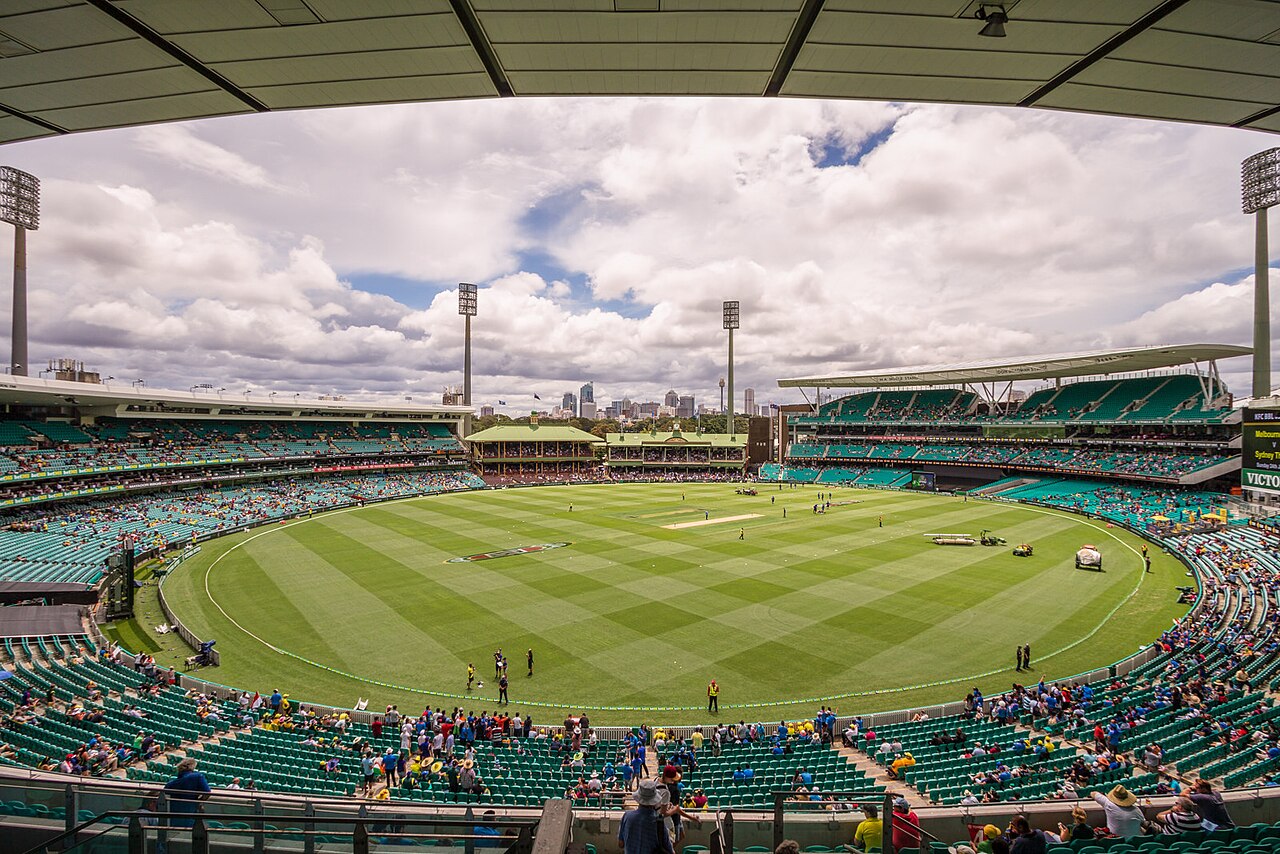
Some grounds impress you with sheer scale; the Sydney Cricket Ground wins you over with character. Tucked into the parkland of inner Sydney, the SCG blends handsome heritage stands with a modern arena, and its place in the Australian summer — the New Year Test — has given it a rhythm and a mood unlike any other venue in the country. This is a ground where history is visible in the architecture and felt in the atmosphere, a venue that rewards the visitor willing to look beyond the cricket to the layers of tradition that surround it.
A ground steeped in tradition
The Sydney Cricket Ground has been staging major cricket since the nineteenth century, and it wears its long history with pride. Over the decades it has become one of the most storied venues in world cricket, a place where generations of Australian greats have played and where countless memorable matches have unfolded. Unlike some grounds that have been rebuilt from scratch, the SCG has evolved gradually, preserving elements of its past even as it has modernised, so that a visit today is a journey through the layers of the game's history.
The ground sits within a wider sporting precinct in Moore Park, a short distance from the centre of Sydney and easily reached from the city. That parkland setting, with tree-lined approaches and open space around the arena, gives the SCG a gracious, unhurried feel that sets it apart from stadiums hemmed in by the city.
The heritage stands
The SCG's defining architectural glory is its pair of historic stands, the Members' Pavilion and the neighbouring Ladies' Stand, which date from the late Victorian and Edwardian eras. With their pitched roofs, ornate ironwork and old-world charm, they are among the most beautiful pieces of cricketing architecture anywhere in the world, and they have been carefully preserved as heritage-listed buildings. To sit beneath their gables, watching the game as spectators have done for well over a century, is one of the special experiences the sport can offer.
These old stands stand in deliberate contrast to the modern grandstands that make up the rest of the ground. The redevelopment of the SCG over the years has added sweeping contemporary structures with excellent sightlines and facilities, but the heritage buildings have been kept at the heart of the ground. The result is a venue that feels both current and deeply rooted in the past — a rare and appealing combination.
The Hill and the ground's traditions
For much of its history, the SCG was famous for the Hill, a grassy embankment where spectators would gather, often in raucous good humour, and where some of the ground's most colourful traditions took root. Though the ground has been redeveloped and the old grassy banks largely replaced by seating, the spirit of the Hill lingers in the memory and in the character of the SCG crowd, which has long been known for its wit and its close engagement with the play.
Another cherished tradition is the presence, at one end of the ground, of a famous scoreboard and the surrounding trees, which have framed the cricket for generations and give the SCG a gentle, garden-like quality. Little touches like these — the old scoreboard, the tree-lined boundary, the heritage stands — combine to make the ground feel more like a much-loved cricketing garden than a purely functional stadium.
The New Year Test
If Melbourne owns Boxing Day, Sydney owns the New Year. The SCG traditionally hosts the Test match that begins in the first days of January, a fixture that has become one of the great rituals of the Australian summer. Coming after the Boxing Day Test in Melbourne, the New Year Test at the SCG often carries real significance in a series, and its timing gives it a distinctive holiday atmosphere — a relaxed, festive crowd settling in to enjoy cricket in the warm Sydney summer.
The New Year Test has its own cherished customs, including moments of tribute and reflection woven into the occasion, and it regularly draws large, appreciative crowds across its opening days. For visiting teams and their travelling supporters, a Test at the SCG in early January is one of the highlights of a tour of Australia, and for the home side it is a fixture rich with history and meaning.
A spinner's ground in a fast bowler's country
The SCG has long enjoyed a reputation as a spin-friendly ground, at least by Australian standards. While pitches around the country are often known for pace and bounce, the Sydney surface has traditionally tended to wear and take turn as a match progresses, giving slow bowlers a genuine role in the later stages of a Test. Wrist-spinners and finger-spinners alike have enjoyed success here, and captains have often gone into an SCG Test with an extra spin option in mind.
That said, the ground offers something for everyone. Fast bowlers can find help early, particularly in the cooler morning conditions, and batters who apply themselves on a good surface have scored heavily over the years. The evolving nature of the pitch, from a fair contest early to a spinning surface late, makes the SCG a ground where reading the conditions and planning for the later days is a key part of winning a Test.
A knowing crowd
The SCG crowd is known for its knowledge and its good humour. This is a ground where spectators appreciate the finer points of the game, where good cricket from either side is applauded, and where the holiday timing of the New Year Test brings a warm, sociable mood to the stands. It is rarely the deafening cauldron of some subcontinental grounds; instead, its atmosphere is one of relaxed appreciation punctuated by genuine drama when a match reaches its climax.
There is a sense, at the SCG, of cricket being enjoyed as it was meant to be — in beautiful surroundings, under the summer sun, in front of a crowd that understands and loves the game. That gentler, more traditional atmosphere is a large part of the ground's enduring charm.
Visiting the SCG
- Take in the heritage stands: the Members' Pavilion and Ladies' Stand are architectural treasures, and even a glimpse of them is part of the experience.
- Go for the New Year Test: the January Test is the ground's signature occasion, with all the atmosphere of an Australian summer holiday.
- Explore the precinct: the ground sits in Moore Park, close to the city and to Sydney's many other attractions, so a match fits easily into a wider visit.
- Enjoy the setting: the tree-lined boundary and parkland surroundings make the SCG one of the most pleasant grounds anywhere to spend a summer's day.
Why the SCG endures
The SCG matters because it preserves so much of what makes cricket special. In its heritage stands, its cherished traditions and its beloved New Year Test, the ground holds onto the game's history while remaining a first-class modern venue. It is proof that a ground can move with the times without losing its soul.
For players, performing at the SCG is a privilege precisely because of that heritage. To walk out past the old pavilion, to play a New Year Test in front of a knowing Sydney crowd, is to join a line of cricketers stretching back well over a century. That continuity, that sense of belonging to a long and cherished story, is what makes the Sydney Cricket Ground one of the game's true treasures.
A living museum of the game
To walk around the SCG is to move through the history of Australian cricket. The heritage stands, the old scoreboard, the memorials and honour boards, the very layout of the ground — all of it speaks of a venue that has been at the centre of the game for generation after generation. The great names of the Australian summer have all performed here, and the ground remembers them, in its architecture and in the collective memory of the crowds who return year after year. There is a strong sense, at the SCG, of belonging to a story much larger and older than any single match.
That heritage is not preserved as a museum piece to be admired from behind glass, but kept alive by the cricket that continues to be played. Each season brings new performances to add to the ground's long record, new memories layered on top of the old, so that the SCG feels less like a monument to the past than a place where past and present meet. A young player making a debut here does so on the same turf as the legends whose names adorn the stands, and that continuity gives the ground much of its emotional weight. For the spectator, it means that a day at the SCG is never simply about the match in front of you; it is about taking your place, however briefly, in a tradition that stretches back well over a hundred years and shows no sign of ending. That is the quiet magic of the Sydney Cricket Ground, and it is why those who know it hold it so dear.
Fancy testing whether you would know those gabled Victorian stands anywhere? crickedle's daily Ground Spotter shows a single photo of a famous venue — the SCG is in the pool, alongside its Boxing Day sibling the MCG — and lets you earn hints with each miss.
Fancy a challenge? crickedle is a free daily cricket guessing game with six modes — a new puzzle every day.
Play today's puzzle →