Grounds · 2026-06-10 · By Spud
The Oval, London: a guide to England's other great ground
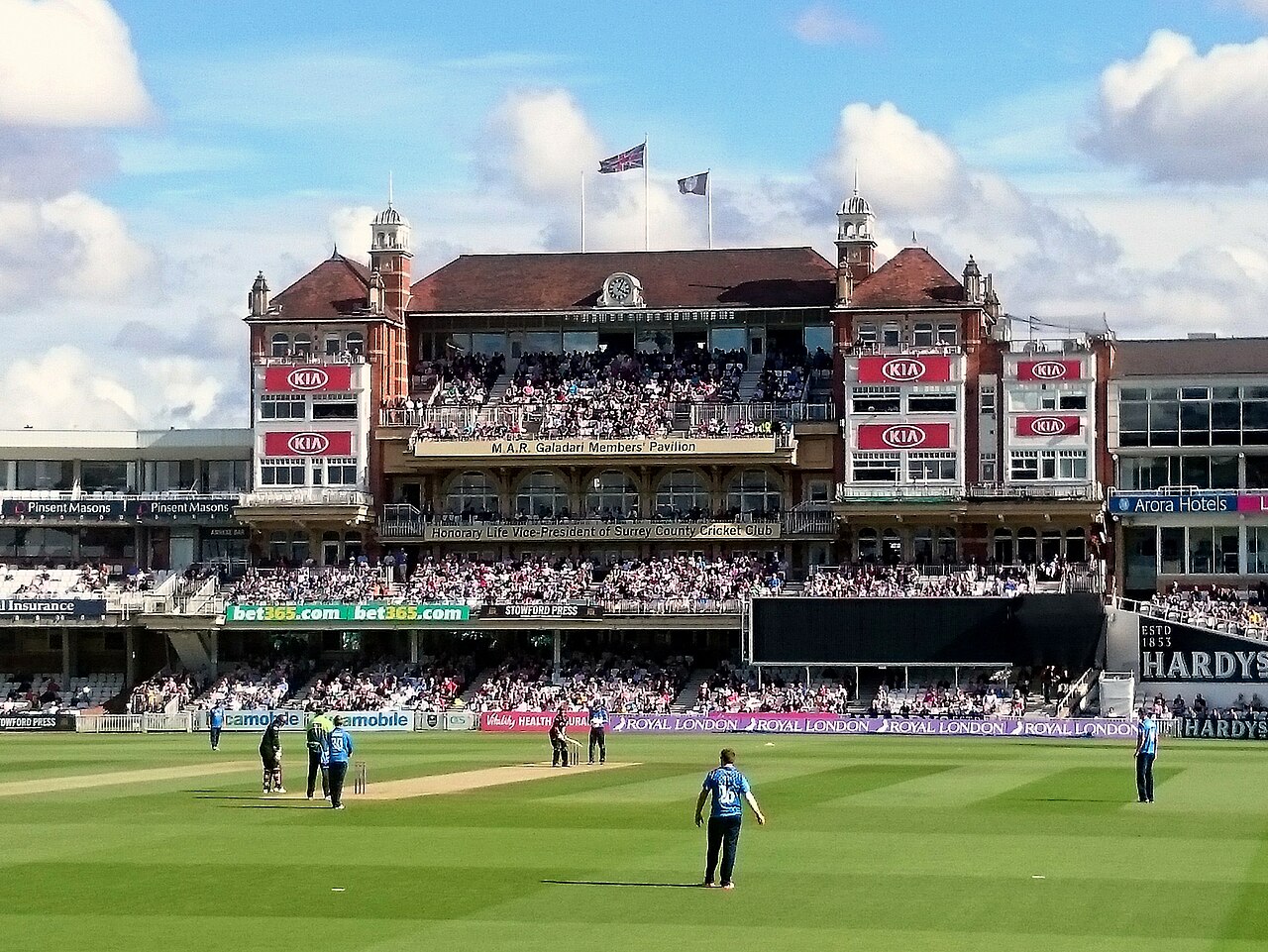
Lord's may be the ground that everyone knows, but a few miles south of the river stands a venue with a claim on English cricket every bit as deep. The Oval, in Kennington, has been staging great matches for more than a century and a half, and its place at the very end of the English summer gives it a character all of its own. This is where seasons are settled and where cricket history has quietly been made again and again. For many Londoners, and for cricket followers around the world, The Oval is not the poor relation of Lord's but a great ground in its own right, with a heritage and a personality entirely distinct from its more celebrated neighbour.
The home of London's other great ground
The Oval sits in south London, in the borough of Lambeth, a short distance from the Thames and easily reached from the centre of the city. It is the home of Surrey, one of the oldest and most successful counties in English cricket, and it has been the county's headquarters since the club was founded in the mid-nineteenth century. That long, unbroken association gives the ground a settled, historic feel — this is not a stadium that appeared in the modern era, but one that has grown and been rebuilt around the same patch of turf for generations.
For all its history, the ground has been extensively modernised over the years, with new stands raising its capacity and improving the experience while keeping the essential shape and spirit intact. The result is a venue that feels both grand and familiar, a large international ground that has never quite lost the atmosphere of a county home.
Where Test cricket in England began
The Oval holds a special place in the story of the game because it staged the first-ever Test match played on English soil, between England and Australia, in the early 1880s. That alone would secure its place in cricket history, but the ground's significance runs deeper still. It was a defeat suffered at The Oval that gave rise to the famous mock obituary lamenting the death of English cricket, and from that piece of newspaper wit was born the legend of the Ashes — the urn, the rivalry and the phrase that have defined England–Australia cricket ever since.
To walk into The Oval, then, is to walk into a ground where some of the sport's founding moments took place. Few venues can claim a more direct link to the origins of Test cricket, and fewer still wear that heritage as comfortably.
The end-of-summer Test
If the MCG owns Boxing Day, The Oval owns the close of the English summer. For as long as anyone can remember, it has traditionally hosted the final Test of the home season, and that timing gives its big matches a distinctive mood. By late summer the series has usually reached its climax, and The Oval often stages the decisive act — the match where a rubber is won or lost, where careers reach their end and reputations are sealed.
There is something poignant about cricket at The Oval in early autumn. The light softens, the shadows lengthen across the outfield, and there is a sense of a long season drawing to its close. Retiring players have taken their final bows here, series have been settled in front of packed and expectant crowds, and the ground has witnessed countless emotional farewells. That end-of-summer quality is as much a part of The Oval's identity as any single match.
The gasholders and the setting
No description of The Oval is complete without its gasholders. The old gas storage structures that stand beyond one end of the ground are among the most recognisable landmarks in world cricket, an unmistakable part of the skyline that has framed the action for well over a century. Commentators refer to the "gasholder end", and for many fans a glimpse of those great iron frames is enough to identify the ground in an instant.
The surrounding area has changed and developed over the years, but the gasholders have remained a defining feature, a quirky, industrial backdrop that could belong to no other ground. They give The Oval a sense of place that is rooted firmly in south London, a reminder that this is a working city ground rather than a stadium set apart in landscaped grounds.
The stands and the atmosphere
The Oval's stands have been rebuilt and expanded over the decades, and the ground today is a substantial international venue capable of holding a large, lively crowd. The pavilion, with its traditional architecture and long history, sits at one end, while more modern stands rise around the rest of the bowl. The redevelopment has been done sympathetically, so that the ground feels contemporary without losing its heritage.
The atmosphere at a big Oval Test is warm and knowledgeable. London crowds are appreciative of good cricket from either side, and the end-of-summer timing often brings a relaxed, festival-like quality to proceedings, particularly as a series reaches its conclusion. There is banter, there is singing, and on the final afternoon of a closely fought Test the tension can be as sharp as anywhere in the game.
True bounce, then turn
The Oval pitch has a long-held reputation as one of the truer, faster surfaces in England, generally offering good bounce and value for shots. Batters who apply themselves have often scored heavily here, and the ground has seen many large totals and celebrated innings down the years. Yet the surface is far from one-dimensional. As a Test match progresses into its later stages, the pitch has traditionally begun to take spin, and slow bowlers have frequently played a decisive role in the closing acts of a match — fitting, perhaps, for a ground that so often stages the season's finale.
Early in a game, and under overcast London skies, the fast bowlers can find swing and seam movement, so the balance between bat and ball can shift with the conditions and the passing days. That variety, and the way the surface evolves across five days, makes The Oval a rewarding ground for those who appreciate the strategic ebb and flow of Test cricket.
Visiting The Oval
- Easy to reach: the ground sits close to a Tube station of the same name and is a short journey from central London, making it one of the more accessible major grounds anywhere.
- Aim for the last Test: the end-of-summer Test is the ground's signature occasion, with all the drama of a series reaching its climax.
- Look for the gasholders: take a moment to appreciate the famous skyline — it is one of cricket's great backdrops and instantly identifies the ground.
- Soak up south London: the surrounding area rewards exploration, and a match at The Oval fits naturally into a few days enjoying one of the world's great cities.
Where English summers are settled
The Oval matters because it carries the history of Test cricket in England from its very beginnings. This is the ground where the format first arrived on English soil, where the Ashes legend was born, and where, year after year, the home summer reaches its dramatic conclusion. Heritage and occasion come together here in a way that few grounds can match.
For players, a Test at The Oval carries a particular weight. To perform on the ground where it all began, in the match that so often decides a series, is one of the game's cherished experiences — and for the crowds who gather each late summer, it is a fixture woven deep into the rhythm of the English cricketing year.
More than a Test ground
Although its Test matches are the fixtures that draw the widest attention, The Oval is a working cricket ground the whole summer long, and much of its charm lies in that everyday life. As the home of Surrey, it stages a full programme of county cricket across the season, and there is a particular pleasure in watching a domestic match here on a quiet weekday, the great stands sparsely populated, the play unhurried, the history of the ground all the more palpable for the calm. This is county cricket in one of its grandest settings, and for many followers of the game it is these unglamorous days, as much as the big internationals, that capture the soul of the place.
The Oval has also embraced the modern white-ball game, hosting floodlit Twenty20 and one-day matches that fill the ground with a younger, noisier crowd and give the old venue a fresh lease of life. That range — from the patient rhythms of a county championship match to the fireworks of a summer evening under lights, by way of the drama of an end-of-season Test — is a large part of what keeps The Oval relevant and beloved. It is a ground that has never stood still, moving with the game through every era while holding fast to the heritage that makes it unique. Few venues manage that balance between past and present so gracefully, and fewer still carry it off with The Oval's particular south London charm.
Reckon the gasholders make The Oval unmissable in a photograph? See how quickly you can pick it out — along with Lord's and the rest of the world's great venues — in crickedle's daily Ground Spotter puzzle.
Fancy a challenge? crickedle is a free daily cricket guessing game with six modes — a new puzzle every day.
Play today's puzzle →