Grounds · 2026-05-30 · By Spud
Wankhede Stadium, Mumbai: a visitor's guide
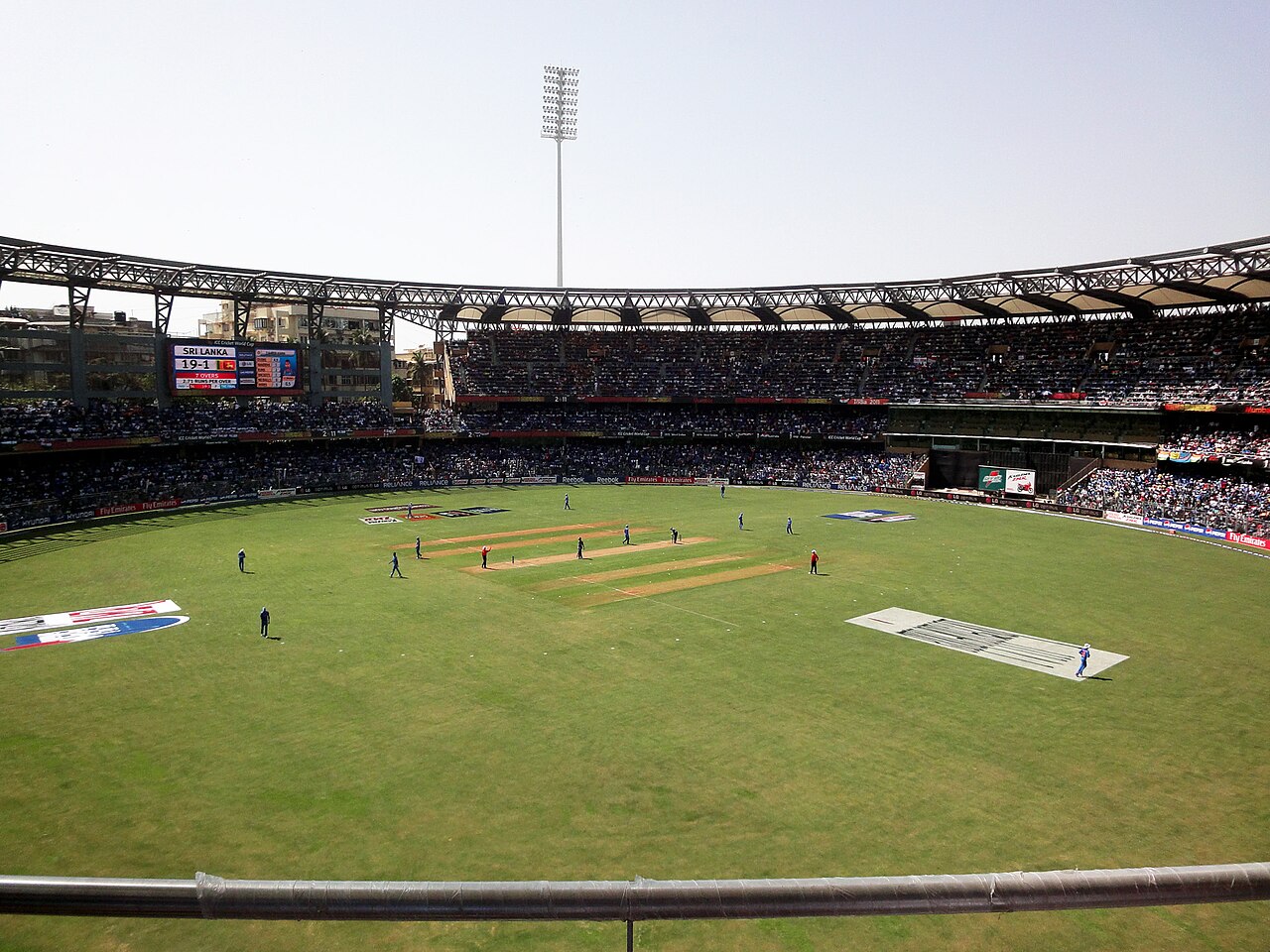
There are grounds that grow on you slowly, and then there is Wankhede Stadium, which grabs you the moment you walk in. Set close to the Arabian Sea in the heart of Mumbai, it is a compact, steep-sided arena where the crowd sits almost on top of the action and the noise has nowhere to go but down onto the pitch. For a city that lives and breathes cricket, this is the great gathering place.
A ground in the heart of a cricket-mad city
Mumbai is arguably the beating heart of Indian cricket. It has produced a remarkable roll-call of the game's finest players, its maidans are crowded with young cricketers every weekend, and its passion for the sport runs deep through every neighbourhood. Wankhede Stadium is where all of that energy comes to a focus. Built in the 1970s in the South Mumbai district, it quickly became the city's premier venue and the spiritual home of Mumbai cricket.
The ground sits in a dense, historic part of the city, a short distance from Marine Drive and the sweep of the seafront. Getting there means moving through the crowds and the noise of central Mumbai, and on a match day the streets around the stadium hum with anticipation long before the first ball. That sense of the ground being woven into the fabric of a great city — rather than sitting apart from it in a suburban sports precinct — is part of what makes Wankhede special.
By the Arabian Sea
One of the ground's defining features is its proximity to the sea. The Arabian Sea lies just beyond the stands, and the breeze that drifts in off the water can play a genuine part in the cricket. Fast bowlers who know how to use the conditions have long spoken about the swing on offer, particularly under lights and in the cooler evening air, when the sea breeze picks up and the ball can move late through the air.
That coastal setting also shapes the atmosphere. The humidity of Mumbai hangs over the ground, players glisten in the heat, and as the sun goes down over the water the floodlights take over and the place seems to gather a second wind. Evening matches at Wankhede have a particular quality — the warmth of the day softening, the crowd settling in for a long night, and the lights bouncing off a fast outfield.
The stands and the architecture
Wankhede was substantially rebuilt and modernised ahead of hosting major matches, and the redevelopment gave it a distinctive look. The stands rise steeply around the playing area, wrapped by a series of sweeping roof canopies that shelter spectators from the sun while keeping the bowl open to the sky. Unlike the vast, sprawling arenas of some countries, Wankhede is relatively compact, and that intimacy is a huge part of its character.
Because the seats climb sharply and press close to the boundary, spectators feel genuinely involved in the game. There is little of the distance you get at grounds where a running track or wide concourse separates the crowd from the field. At Wankhede the fans are right there, and when tens of thousands of them are on their feet the effect on the players in the middle is immediate and overwhelming. The stands carry the names of Mumbai cricketing greats and administrators, a reminder at every turn of the city's outsized contribution to the game.
A stage for the biggest occasions
Wankhede has hosted many of the landmark matches of modern Indian cricket, and it is best known to a global audience as the venue for one of the sport's most celebrated finals. On a famous night, the home crowd watched India lift the sport's greatest one-day prize on home soil, and the scenes of joy that followed became some of the most replayed images in the game's history. To have been present in the ground that evening is something Mumbai fans still talk about with pride.
Beyond that unforgettable occasion, the stadium has staged countless Test matches, one-day internationals and Twenty20 games, and it is a fortress for the Mumbai franchise in the Indian Premier League. On IPL nights the ground becomes a wall of colour and sound, the home supporters roaring their side through tight run chases. Few venues generate an atmosphere quite so intense, and visiting teams know that silencing this crowd is one of the harder tasks in the sport.
Swing off the sea, spin as it wears
Wankhede has a reputation as a good batting surface, generally offering true bounce and a fast outfield that rewards clean striking. Batters who get themselves in can score freely, and the ground has seen many big totals and memorable individual innings over the years. Yet it is far from a paradise for batting alone. The sea breeze can assist swing bowlers, particularly in the evening, and as a Test match wears on the pitch tends to dry and take spin, bringing the slow bowlers sharply into the contest on the later days.
That combination — pace and bounce early, swing under lights, and spin as the surface wears — makes Wankhede a ground where the balance between bat and ball can shift through a match. Captains watch the pitch and the time of day closely, and the toss can carry real weight. In the white-ball game, the relatively short straight boundaries reward powerful hitting, and big scores are common, but a clever bowler who uses the conditions can still turn a match on its head.
The Wankhede roar
If there is one thing that everyone who has been to Wankhede remembers, it is the noise. Mumbai crowds are knowledgeable and demanding, and when the home side is on top the sound that pours down from the steep stands is extraordinary. A wicket for the home team is met with a roar that seems to lift the whole ground; a tense chase generates a wall of tension and release that players describe as unlike almost anywhere else.
The compact design concentrates all of that energy. Because the crowd sits so close and so steeply, there is no escape from the atmosphere for anyone on the field. For a home player it is the greatest possible support; for a visitor it is a genuine test of nerve. Add the warmth of the evening, the sea breeze, and the sense that the whole city has turned out, and you have one of cricket's truly electric environments.
Visiting Wankhede
- Combine it with the city: Wankhede sits in South Mumbai, close to Marine Drive, the Gateway of India and some of the city's finest food. A match fits naturally into a few days exploring one of the world's great cities.
- Go for an evening game: the ground is impressive by day, but it is under lights, with the sea breeze rising and the crowd in full voice, that Wankhede truly comes alive.
- Arrive early: the streets around the stadium are busy on match days, and the build-up outside — the crowds converging, the anticipation rising — is part of the experience.
- Embrace the heat: Mumbai is warm and humid, so dress lightly, stay hydrated and be ready for a long, loud evening.
Why a night here stays with you
Wankhede matters because it captures the intensity of Indian cricket in one compact, roaring bowl. In a country where the game means so much, and in a city that has given the sport so many of its heroes, this is the great meeting place — a ground where history has been made and where the crowd plays as full a part as anyone on the field.
For players, performing here is a milestone precisely because the stakes and the atmosphere are so high. To score a hundred or win a match in front of the Mumbai faithful, by the Arabian Sea and under the lights, is to experience cricket at close to its most vivid. That is why Wankhede holds such a treasured place in the game, and why a night there stays with everyone who is lucky enough to be present.
A cradle of Indian cricket
Part of what makes Wankhede so resonant is the way it is bound up with the story of Mumbai cricket itself. This is a city whose maidans — the open public grounds where hundreds of matches are played every weekend — have long served as the nursery of Indian talent, and Wankhede sits at the top of that pyramid as the stage every young Mumbai cricketer dreams of reaching. To make it from the crowded maidans of the city to the middle of Wankhede is the classic Mumbai cricketing journey, and generations of players have travelled it.
That local significance gives the ground a meaning beyond its international fixtures. It is a place where careers begin and are made, where domestic cricket is followed with real attention, and where the values of hard, competitive cricket that Mumbai is famous for are handed down from one generation to the next. When the ground fills for a big international night, it is not just a crowd of spectators but a community that has grown up with the game, watching the sport it loves at the venue it holds dearest. That depth of connection between ground, city and game is something no amount of redevelopment can manufacture, and it is a large part of why a night at Wankhede feels so alive.
Next time Wankhede's steep, canopied stands flash up in crickedle's Ground Spotter, you'll know exactly what you are looking at — and if the subcontinental bowls still blur together for you, the Eden Gardens guide is a good place to learn their differences.
Fancy a challenge? crickedle is a free daily cricket guessing game with six modes — a new puzzle every day.
Play today's puzzle →