Explainers · 2026-06-12 · By Spud
DRS explained: how cricket's review system works
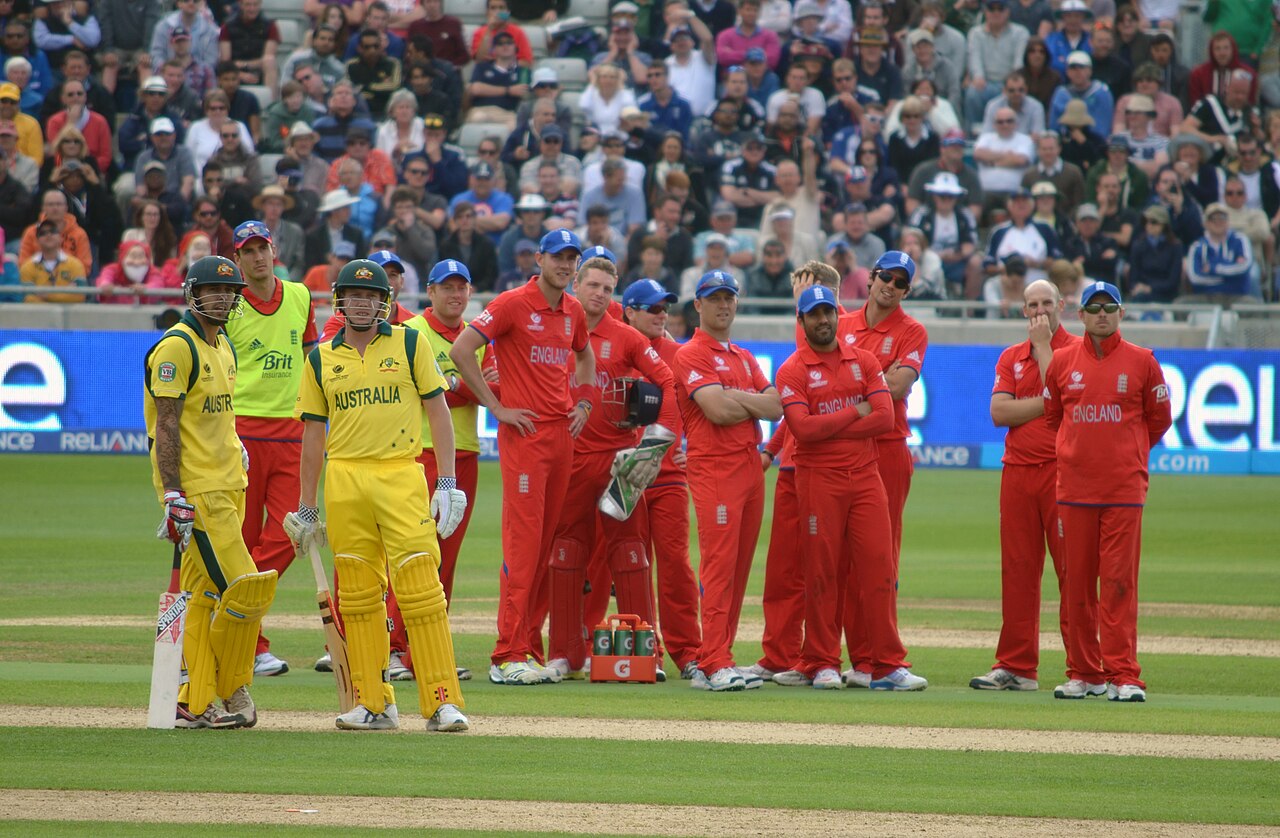
There is a particular kind of tension in modern cricket that did not exist a generation ago: the moment a captain or batter draws a "T" in the air with their hands and the whole ground turns to the big screen. The Decision Review System, universally known as DRS, has become one of the game's great theatres of drama. But behind the slow-motion replays and coloured ball-tracks lies a fairly logical process. Here is how it actually works, and why it has changed cricket without ever quite settling its arguments.
Why DRS exists
Umpiring cricket with the naked eye is extraordinarily hard. A fast bowler's delivery reaches the batter in a fraction of a second; edges are feather-fine; lbw decisions require projecting a ball's future path in an instant. Umpires have always got the overwhelming majority of these right, but the occasional clear error — a thick edge given not out, a ball crashing into the stumps ruled to be missing — could decide a match and haunt a career.
DRS was introduced to catch those clear mistakes. Crucially, it was never meant to re-referee every marginal call or to replace the umpire. Its stated purpose is to correct the obvious howler while leaving the on-field umpire's judgement intact wherever the evidence is not conclusive. Keeping that intention in mind explains almost everything about how the system behaves, including its most misunderstood feature, the umpire's call.
Who can ask for a review
Two different routes lead to a DRS review. The first is the player review: the fielding side or the batter can challenge an on-field decision they believe is wrong. Each team is given a limited number of unsuccessful reviews per innings, so a captain cannot simply challenge everything. Burn your reviews on hopeful punts and you will have none left when a genuine howler goes against you late in the innings. This scarcity turns reviewing into a tactical skill in itself.
The second route is the umpire review, used chiefly for decisions like whether a delivery was a no-ball or whether a catch carried cleanly. Here the on-field umpires themselves refer the matter to the third umpire, who has access to the replays. In both cases the decision ultimately rests with that off-field official, working through the available technology.
The third umpire and the evidence
At the centre of every review sits the third umpire, watching in a booth with access to television replays and a suite of tools. Their job is to gather the evidence, weigh it, and either uphold or overturn the on-field call. They do not start from a blank slate: they begin with the original decision and ask whether there is conclusive evidence to change it. That starting point matters enormously, and we will return to it.
The tools available fall into a few broad categories: high-speed cameras for edges and close run-outs, sound-based and heat-based edge detection, and ball-tracking for lbw. Each answers a different question, and a single review may draw on several of them in sequence. Watching a good third umpire work through the evidence methodically — bat first, then pad, then tracking — is a quietly satisfying part of the modern game.
Ball-tracking and the lbw question
For leg before wicket decisions, the headline technology is ball-tracking. A network of cameras follows the ball's flight, and software reconstructs its path: where it pitched, where it struck the batter, and — the crucial part — where it would have gone next had the pad not been in the way. The system projects that predicted path forward onto the stumps.
It is worth being clear about what this is. The portion of the ball's journey up to the point of impact is measured from real footage. The portion beyond the impact, towards the stumps, is a prediction — a model built on physics and the ball's observed trajectory. It is a very good prediction, but a prediction nonetheless, and that distinction is the whole reason the umpire's call margin exists. Ball-tracking answers the three lbw questions visually: did it pitch in line, did it strike in line, and would it have hit the stumps.
Edge detection: sound and heat
For caught-behind and bat-pad decisions, the question is whether the ball touched the bat or glove at all. Two kinds of technology help. The first is sound-based: sensitive microphones pick up the tiny noise of leather brushing willow, displayed as a spike on an audio trace synchronised with the video. If the spike coincides exactly with the ball passing the bat, that is strong evidence of an edge.
The second is heat-based, detecting the friction generated when the ball grazes the bat or pad. A faint mark shows up where contact occurred, helping to distinguish bat on ball from ball on pad, or to reveal an edge too fine to hear. Neither tool is infallible on its own — sounds can be ambiguous, marks can be faint — which is why the third umpire cross-references them against the visual replay and the audio. Building a picture from several imperfect signals is exactly the skill the role demands.
Umpire's call: the most misunderstood rule
No feature of DRS causes more confusion or more fury than umpire's call. It works like this: on the marginal lbw questions — was the impact in line, would the ball have hit the stumps — the system builds in a margin of tolerance. If the ball-tracking shows only a small part of the ball clipping the stumps, that is deemed too close to be conclusive, and the original on-field decision stands, whatever it was.
The consequence that baffles newcomers is that two identical-looking deliveries can produce opposite results. If the on-field umpire gave it out and the ball is shown just clipping the stumps, the batter is out. If, for the very same tracking, the umpire had given it not out, the batter stays in. Nothing about the ball changed — only the original decision, which the marginal evidence was not strong enough to overturn.
This feels arbitrary until you remember the system's purpose. DRS is meant to correct clear errors, not to re-decide close calls. Where the evidence is genuinely borderline, the law hands the benefit of the doubt back to the human umpire. Umpire's call is not a flaw in the system; it is the system doing exactly what it was designed to do — protecting the on-field decision when the technology cannot be certain.
How a review actually unfolds
Picture a full review. A bowler thunders in, the ball raps the pad, the fielders roar, and the umpire gives it out. The batter, convinced he got an inside edge, consults his partner and signals for a review before the time limit expires. Play stops; everyone turns to the screen.
The third umpire works methodically. First, was it a legal delivery — any suggestion of a no-ball? Next, did the bat touch the ball before the pad, checked against the high-speed replay, the sound trace and the heat mark? If there is a clear edge, the batter is not out and the review ends there. If there is no edge, the third umpire turns to ball-tracking: pitching in line, impact in line, and whether it was hitting the stumps — accounting for umpire's call on the marginal parts. Only when every link points to out is the original decision upheld. The verdict flashes up, the crowd reacts, and the game moves on.
Run-outs, stumpings and no-balls
Lbw and caught-behind decisions grab the headlines, but a great deal of DRS work concerns the more clear-cut questions of run-outs, stumpings and no-balls, where technology tends to give a genuinely definitive answer. For a run-out or stumping, the third umpire studies high-speed footage frame by frame, checking whether the bat or the batter's grounded foot was behind the crease line at the precise instant the bails were dislodged. Because these are questions of position at a single moment, the cameras can usually settle them beyond reasonable doubt.
No-balls add another layer. The front-foot no-ball — bowling with no part of the foot behind the line — can be checked on replay, and in many competitions it is monitored on every delivery so that a wicket taken off an illegal ball is not wrongly allowed to stand. This matters because a batter dismissed off a no-ball should be reprieved, and spotting the overstep with the naked eye, while also watching the other end, is close to impossible for the on-field umpire. Technology quietly removes an entire category of error here, and it does so without the ambiguity that dogs edge and lbw calls.
The limits of the technology
For all its sophistication, DRS is not infallible, and understanding its limits is part of understanding the system. Ball-tracking is a model, not a measurement, of the ball's onward path; edge-detection tools can throw up ambiguous readings, where a spike or a mark is open to interpretation; and camera angles are not always perfect. The people who run reviews are trained to weigh conflicting evidence and to overturn a decision only when the case is genuinely conclusive.
This is why the guiding principle of "conclusive evidence" runs through everything DRS does. If the tools cannot show clearly that the umpire was wrong, the original decision stands. Far from being a weakness, this caution is what keeps the system honest: it acknowledges that the technology has margins of uncertainty, and it refuses to overturn human judgement on the strength of evidence that is merely suggestive. DRS is best thought of not as an infallible oracle but as a powerful second opinion, deployed to catch the mistakes that matter most.
What DRS has changed
The system has reshaped cricket in ways subtle and profound. Batters can no longer rely on padding away straight balls and hoping, because a good lbw shout is now reviewable. Bowlers are rewarded for accuracy that the naked eye once missed. Captains have a new tactical dimension to manage — when to spend a review, when to save it — and a rash challenge can leave a side exposed later in the innings.
Above all, DRS has added a layer of transparency and theatre. Spectators now see, in coloured graphics, the reasoning behind decisions that were once a matter of trust alone. It has not ended the arguments — umpire's call sees to that — but it has made them better informed. If you enjoy following the fine margins of the game, you will find plenty of them in crickedle, the daily cricket guessing game, and its companion modes like Career Trail. The next time a player draws that "T" in the air, you will know exactly what is about to unfold on the big screen.
Fancy a challenge? crickedle is a free daily cricket guessing game with six modes — a new puzzle every day.
Play today's puzzle →