Explainers · 2026-06-23 · By Spud
Powerplays explained: cricket's fielding-restriction overs
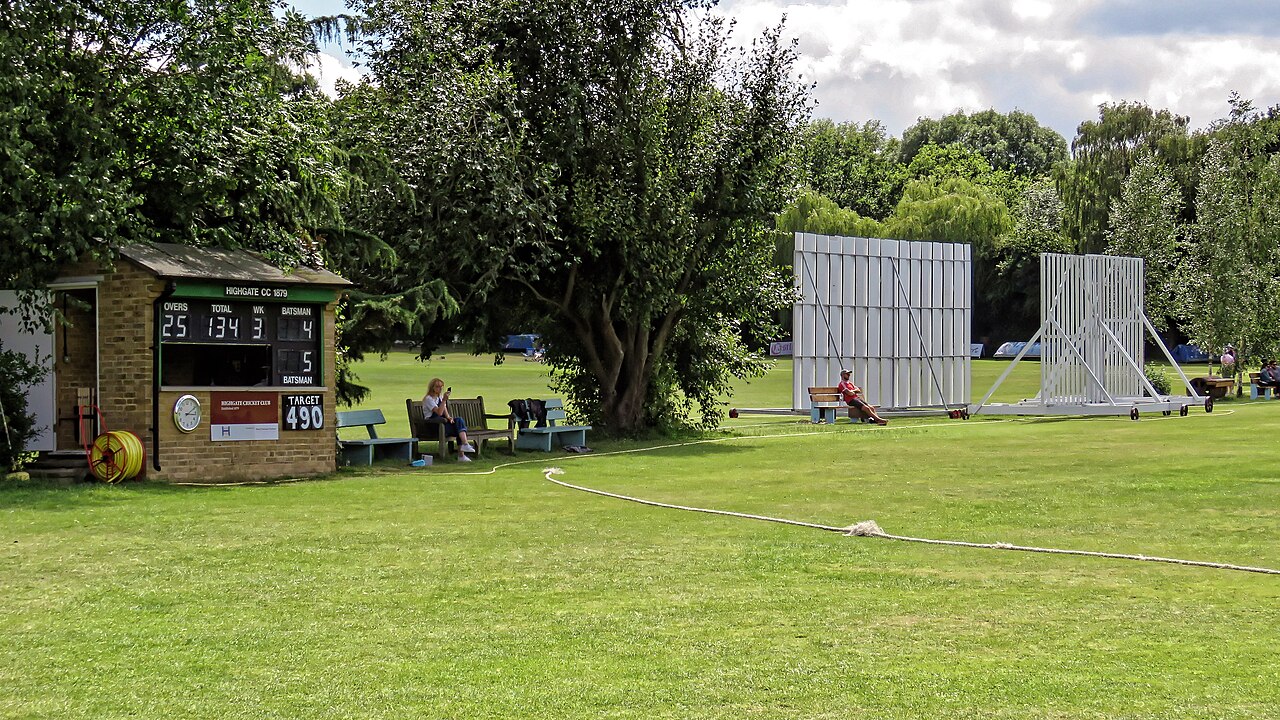
In the limited-overs formats, certain stretches of an innings crackle with a particular energy: boundaries fly, fielders scatter, and the run rate lurches upward. These are the powerplay overs, and the reason for the fireworks is a set of rules that quietly restrict where the fielding side may stand. Understand the powerplay and you understand much of the tactical rhythm of white-ball cricket — why teams start fast, consolidate in the middle, and explode again at the end.
Fielders, boundaries and the basic tension
To grasp powerplays, you first have to grasp the everyday tension of limited-overs cricket. The batting side wants to score as quickly as possible; the fielding side wants to stop them. One of the fielding captain's most powerful levers is simply where he places his men. Push fielders back to the boundary and you cut off the big shots, but you concede easy singles. Bring them into the ring and you choke the singles, but you leave gaps on the rope for the batter to find with a lofted stroke.
Left entirely unregulated, a captain defending a total in the closing overs would simply post almost everyone on the boundary, turning the game into a war of attrition. Powerplays exist to prevent that — to force the fielding side, for defined periods, to keep fielders up in the ring, creating gaps near the boundary and encouraging attacking, entertaining cricket.
What a fielding restriction actually is
A fielding restriction is a limit on how many fielders may be positioned outside a marked inner circle — an oval, painted on the outfield, that runs a set distance from the pitch. During a powerplay, only a small number of fielders are permitted beyond that circle; the rest must stay inside it, close to the action.
The effect is immediate and dramatic. With so few fielders allowed on the boundary, wide expanses of the outfield are left unguarded. A batter who can clear the infield, even by a few metres, will find the ball racing away for four, because there is simply no one out there to cut it off. This is why the powerplay overs reward aggression: the risk of hitting over the top is offset by the acres of undefended grass beyond the ring.
Powerplays across the formats
Both of the major limited-overs formats — the fifty-over game and the twenty-over game — use powerplays, though the details differ. In each case the innings is divided into phases, and the fielding restrictions are tightest at the very start, when a mandatory powerplay keeps most fielders inside the circle for the opening overs.
After that opening burst, the restrictions ease: a larger number of fielders are allowed outside the circle for the bulk of the innings, though never so many that the entire boundary can be sealed off. The precise number of powerplay overs and the exact fielding limits vary between formats and can be adjusted by the game's governing bodies over time, so rather than memorise numbers that may change, it is more useful to understand the shape: a tightly restricted start, a middle period with more freedom for the fielding side, and — in some formats — a final phase where a couple of fielders are again pinned inside the ring.
The batting side's calculation
For the batting side, the powerplay is an opportunity that must be seized without being squandered. With the field up and the boundaries open, this is the moment to score quickly — but wickets are precious, and losing several early can wreck the innings before it has begun. The best opening batters walk a tightrope, attacking the gaps and cashing in on the loose ball while judging carefully which risks are worth taking.
There is also the matter of the new ball, which in the opening powerplay may be swinging or seaming, making run-scoring harder and edges more likely. So the calculation is delicate: exploit the fielding restrictions and the undefended outfield, but respect the movement on offer and the value of wickets in hand. A side that races to a flying start without loss has set itself up beautifully; a side that loses a clutch of early wickets chasing boundaries has often thrown the advantage away.
The bowling side's response
The fielding captain, meanwhile, is trying to make the most of a hand that the powerplay has deliberately weakened. Unable to protect the boundary fully, he leans instead on his best bowlers, on movement with the new ball, and on tight, disciplined lines that give the batter little room to free his arms. The aim during the opening powerplay is often to take wickets: with attacking fields more or less mandated by the restrictions, this is the natural time to hunt.
Captains also think carefully about which bowlers to use when. Holding back a canny, economical bowler for a later powerplay, or using a wicket-taking spearhead up front while the field is at its most attacking, are the kinds of decisions that win and lose matches. The powerplay turns bowling changes into a genuine chess match, because the restriction on the field forces the captain to buy control through skill rather than simply parking fielders on the rope.
The rhythm of an innings
Powerplays give a limited-overs innings its characteristic three-act shape. The opening phase, with the field up, is a burst of attacking intent — fast scoring balanced against the danger of early wickets. Then comes the middle period, when the fielding side is allowed to spread out a little more: the run rate typically settles as batters consolidate, rotate the strike and build a platform, saving their biggest hitting for later.
Finally there is the climax, the closing overs, when the batting side unloads. In these last overs the field may again be partly restricted in some formats, and even where it is not, the batters accept enormous risk in pursuit of quick runs, throwing the bat at everything. This ebb and flow — fast, steady, frantic — is one of the reasons the shorter formats are so watchable, and it is the powerplay rules that sculpt it. Knowing the phases lets you read an innings as it unfolds, sensing when a side is ahead of the game and when it is falling behind the required pace.
Tactics, matchups and the human drama
Beneath the broad phases lies a wealth of finer tactics. A captain might use the powerplay to attack a batter's known weakness while the field is up and catchers are in place. A batting side might promote an aggressive striker up the order specifically to exploit the fielding restrictions, or hold a big hitter back for the final assault. Matchups — a particular bowler against a particular batter — become especially charged when the field cannot be arranged to hide a weakness.
All of this makes the powerplay a stage for individual drama. A fearless opener taking on the new ball, a canny bowler defending the indefensible with clever changes of pace, a captain gambling on an unexpected bowling change: these are the moments that limited-overs cricket is built around, and they are shaped, at bottom, by where the rules say the fielders may stand. If you enjoy testing your knowledge of the batters and bowlers who thrive in these phases, Playing XI and the other modes at crickedle are built for exactly that.
Setting a target versus chasing
The powerplay plays differently depending on which side of the contest a team finds itself. A side batting first, setting a target, uses the opening powerplay to lay a foundation for a big total, knowing it does not have to score at any particular rate — only to build a platform from which the later overs can be attacked. There is freedom in that: the batters can weigh up how aggressive to be, gambling on fast starts or preferring to preserve wickets for a late surge, without a fixed number staring back at them.
A side batting second, chasing, faces a subtly different equation. It knows exactly how many runs are needed and how many overs remain, which turns the powerplay into a question of arithmetic as much as instinct. Get ahead of the required rate early, while the field is up and the boundaries are open, and the chase becomes comfortable; fall behind, and pressure mounts with every over as the fielding restrictions ease and the gaps close. Good chasing sides treat the opening powerplay as the moment to bank runs cheaply, before the field spreads and scoring grows harder. Reading whether a chasing team is winning or losing its powerplay is one of the most reliable ways to sense which way a match is drifting.
A rule that keeps evolving
It is worth remembering that powerplay regulations are not fixed for all time. The game's governing bodies periodically adjust the number of overs, the fielding limits and the way the phases are divided, usually in response to whether the balance between bat and ball has tilted too far one way. When bowlers are being carted to all corners, the rules may be tightened to give the fielding side more protection; when scoring stagnates, the restrictions may be loosened to encourage strokeplay.
This willingness to tinker is a feature, not a flaw. Limited-overs cricket is an evolving spectacle, and the powerplay is one of the main dials the administrators turn to keep it fresh and fair. It is why fans should focus on the underlying idea — restrict the field to force attacking play at set moments — rather than fixating on any particular set of numbers, which may well look different a few seasons hence. The principle endures even as the specifics shift.
Why the rule endures
Powerplays were introduced, and have been refined ever since, because they solve a real problem: without them, limited-overs cricket would drift towards cautious, boundary-guarding stalemates, especially when a side is defending a total. By forcing attacking fields at defined moments, the rules guarantee periods of genuine contest and entertainment, keeping the balance between bat and ball from tipping too far towards dull containment.
They also add a layer of strategy that rewards the thoughtful viewer. Once you know what the fielding circle means and how the restrictions shift through an innings, you can read the tactics unfolding in front of you — the calculated aggression, the held-back bowler, the promoted pinch-hitter, the gamble in the final over. What looks like chaos becomes a game of managed risk, governed by a simple idea: for a while, the fielding side is not allowed to hide. To put your own reading of the game to the test, a fresh cricket puzzle is waiting each day over at crickedle.
Fancy a challenge? crickedle is a free daily cricket guessing game with six modes — a new puzzle every day.
Play today's puzzle →