Tournaments · 2026-06-05 · Updated 2026-07-13 · By Spud
A short history of the Cricket World Cup
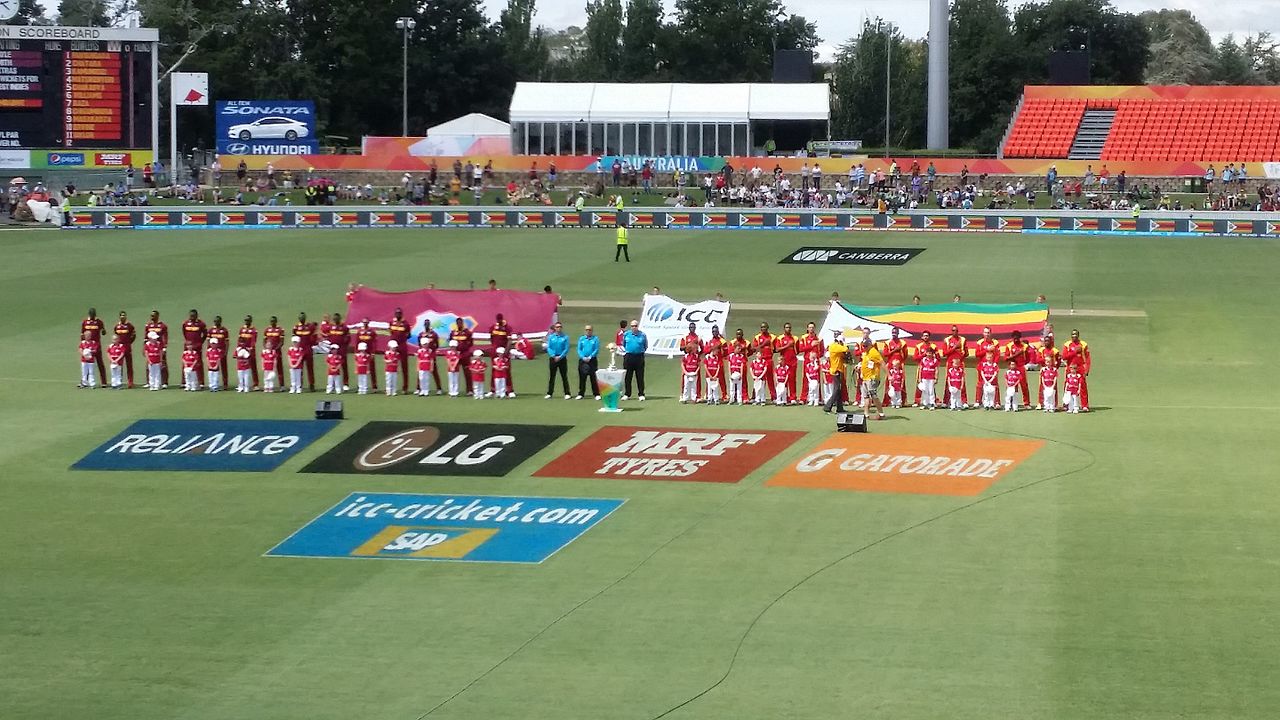
The Cricket World Cup is the biggest prize in the one-day game, a tournament that arrives roughly every four years and briefly turns whole nations into cricket obsessives. Yet for a sport that traces its international matches back to the nineteenth century, the World Cup is a surprisingly modern invention. Its story is one of steady reinvention — of a competition that has grown, changed colour, and reshaped the way the game is played.
Before the World Cup: why it took so long
Cricket had international fixtures for almost a century before anyone staged a global tournament. The reason is simple: the game's showpiece was Test cricket, played over several days, and a knockout competition of five-day matches was impractical. You cannot run a tournament in which a single game might end in a draw after a week of play.
What changed everything was the arrival of limited-overs cricket. By capping each side's innings at a fixed number of overs, the one-day game guaranteed a result in a single day. That format — decisive, compact and television-friendly — was the missing ingredient. Once administrators saw that one-day matches drew crowds and produced clear winners, a global tournament suddenly became possible.
1975: the first tournament
The inaugural men's World Cup was held in England in 1975. England was the natural host: it had the grounds, the organisation and long summer days that allowed sixty-over matches to finish before dark. Yes, sixty overs — the early World Cups gave each side a much longer innings than the fifty we know today.
The matches were played in traditional white clothing with a red ball, in daylight, and the whole tournament was completed in a couple of weeks. It was a modest affair by later standards, but it worked. Crowds came, the cricket was competitive, and the idea proved itself. A second tournament followed a few years later, again in England, cementing the format and the four-yearly rhythm that broadly holds to this day.
Leaving England: the tournament goes global
For its first three editions the World Cup stayed in England, but the appetite for the tournament was worldwide, and it could not remain a purely English event. The competition began to travel, and hosting it became a source of enormous national pride.
When the tournament moved to the Indian subcontinent for the first time, it signalled a decisive shift in cricket's centre of gravity. The passion for the game in India, Pakistan and Sri Lanka was on a scale English grounds could not match, and staging the World Cup there proved that the sport's heartland was moving east. Later editions were hosted across every major cricketing region, from Australia and New Zealand to South Africa and the Caribbean. Each host brought its own conditions — bouncy pitches, slow turners, humid coastal air — and part of the tournament's richness is that teams must adapt to wherever it is played.
From sixty overs to fifty, and into colour
The early World Cups looked quite different from the modern spectacle. Two changes stand out. The first was the reduction of each innings from sixty overs to fifty, which became the standard length for the one-day game and remains so. Fifty overs proved the sweet spot: long enough for an innings to have a shape and a story, short enough to finish comfortably in a day.
The second was the arrival of coloured clothing, white balls and floodlit day-night matches. Instead of white flannels and a red ball, teams took the field in national colours under lights, playing into the evening so that more people could watch after work. This transformation made the one-day game a genuine prime-time event and gave the World Cup much of its modern character — the packed evening crowds, the ball glowing under the floodlights, the sense of occasion.
How the format has evolved
The structure of the tournament itself has never stopped changing, and administrators have wrestled repeatedly with a basic tension: how to give every invited nation a fair run while still producing a gripping finish.
- Group stages and knockouts. Most editions have used a group phase to whittle the field down, followed by knockout semi-finals and a final. It is a familiar shape, but the details — how many groups, how many qualify, how the later rounds are seeded — have varied a great deal.
- The problem of dead rubbers. Some formats produced too many matches that meant nothing, with strong teams already through and weak ones already out. Others swung the opposite way, where a single upset or a rained-off game could knock a favourite out early.
- The Super phase experiment. Various tournaments have tried intermediate rounds — a second group stage carrying results forward — to reward consistency over a lucky day. Later editions returned to simpler structures, sometimes a single long league in which every team plays every other before the top few advance.
There is no perfect answer, and the format continues to be tweaked from one tournament to the next. The underlying aim is always the same: to make sure the best team over the whole event, not merely the team that peaks on one afternoon, has the best chance of lifting the trophy.
Moments that defined the tournament
What lifts the World Cup above an ordinary series is the weight each match carries. Because the tournament comes only every four years, a single innings or spell can define a career and live in the memory for decades. Underdogs have toppled favourites, unfancied nations have gone on astonishing runs, and finals have been decided in the closing overs with a whole country holding its breath.
The World Cup has also been the stage on which new styles announced themselves. Aggressive opening batting, the deliberate use of spin in the middle overs, innovative field settings and clever slower-ball bowling all found a global audience at these tournaments. Watching how the best sides approached a World Cup often revealed where the one-day game was heading next.
Associate nations and the growing game
One of the quiet pleasures of the World Cup has been the presence of teams from outside the traditional cricketing powers. Alongside the established Test-playing nations, the tournament has long given places to associate teams — countries where cricket is smaller but growing. These sides rarely win the trophy, but they provide some of the competition's most joyful stories: a shock victory over a giant, a home hero playing the innings of his life, an unheralded bowler running through a famous batting line-up.
The balance between including these nations and keeping the tournament sharp has been a recurring debate. Larger fields spread the game's message wider and reward developing cricket countries; leaner fields produce fewer one-sided matches. However the numbers are set in a given year, the associate teams remain central to what the World Cup is for — a genuinely global event rather than a closed shop of the usual few.
Why the World Cup still matters
Franchise leagues and packed international calendars mean there is more cricket than ever, and much of it is excellent. Yet the World Cup keeps its unique standing. Playing for money and a club title is one thing; playing for your country in a tournament that comes round only once every four years is another. The pressure is different, the pride is different, and the reward — being champions of the world for the next four years — cannot be bought.
That scarcity is the secret. A domestic league title can be won again next season, but a World Cup missed is a World Cup gone for years. It is why players speak of it as the pinnacle of the one-day game, and why the tournament, for all its changes of length and colour and format, has never lost its hold on the cricketing public.
A player might get only two or three cracks at the tournament in a whole career, which is why winners' medals are treasured above almost anything else in the fifty-over game — and why finals at grounds like Lord's and the MCG carry the weight of a generation's hopes.
A sibling on its own cycle: the T20 World Cup
Alongside the fifty-over event, a T20 World Cup now runs on its own cycle, spreading the global game to more nations and giving associate teams a genuine stage. The shorter format's tournament is faster, more frequent and more open to upsets, and together the two competitions have made World Cup cricket a near-permanent fixture of the calendar rather than a once-every-four-years visitor.
If following the World Cup's long cast of players and teams appeals to you, crickedle turns that history into a daily puzzle. Try the Career Trail mode to trace players through the sides they represented, or browse the crickedle blog for more on the tournaments that shaped the game.
Fancy a challenge? crickedle is a free daily cricket guessing game with six modes — a new puzzle every day.
Play today's puzzle →