Explainers · 2026-05-31 · By Spud
LBW explained: cricket's most argued-about rule
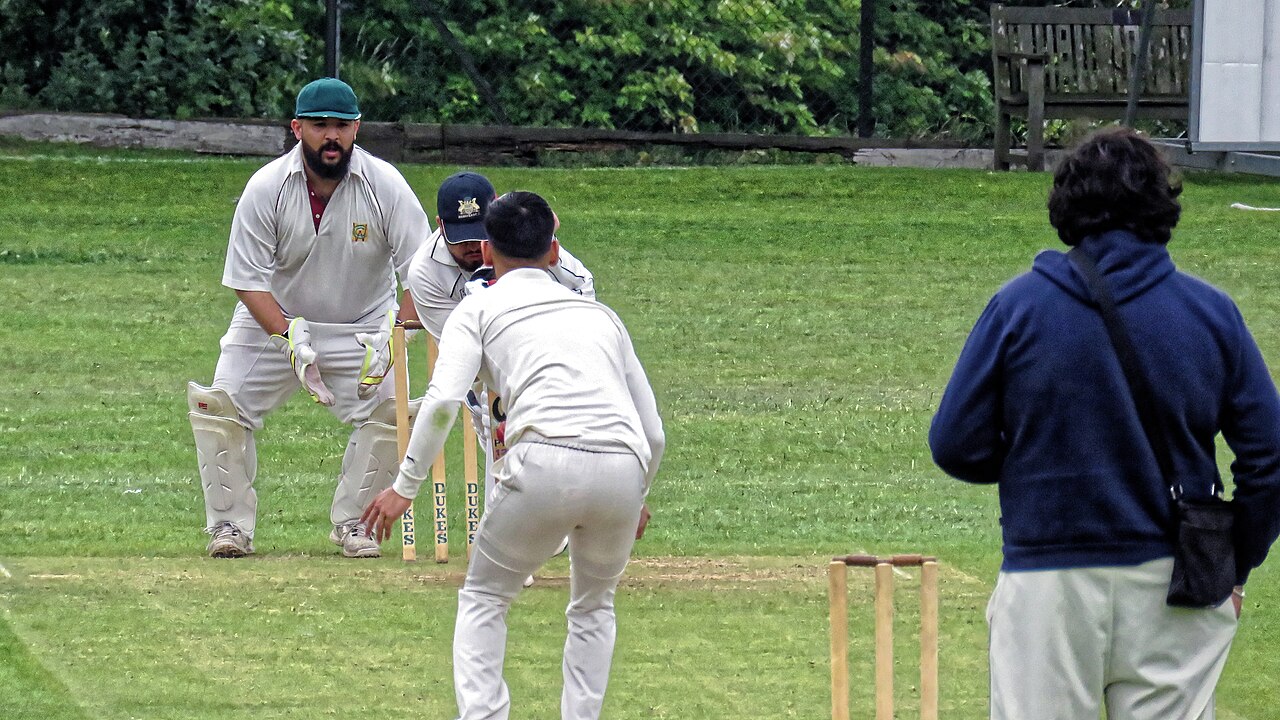
Few decisions in cricket generate as much heat as leg before wicket. A finger goes up, a batter trudges off shaking his head, and half the ground insists it was missing leg stump. Yet beneath the arguments sits a logical rule with a handful of clear tests. Once you know what the umpire is actually weighing up, lbw stops being a mystery and becomes one of the most satisfying parts of the game to follow.
What lbw is trying to prevent
The whole point of leg before wicket is simple: a batter should not be allowed to use his body to protect the stumps when the bat could and should have done the job. Without an lbw law, a batter could simply plant a leg in front of the wicket and let every straight ball thud into his pad, safe in the knowledge that the ball could never reach the timber. Cricket would grind to a halt.
So the law says that if the ball would have hit the stumps but for the batter's body getting in the way, the batter can be given out — provided a series of conditions are met. Those conditions are what the umpire runs through, almost instantly, every time there is an appeal.
The chain of questions an umpire asks
When the ball strikes the pad and the bowler's side goes up in appeal, the umpire is not making a single yes-or-no judgement. He is working through a short chain of questions, and the answer to every one of them must point towards "out" before the finger can be raised. Miss any single link and the batter is not out.
Those questions, in order, are roughly these: Was the delivery legal? Did the ball pitch in a permitted place? Where did it strike the batter, and was he offering a shot? And finally, would it have gone on to hit the stumps? Let us take each in turn, because every one of them decides real matches.
Pitching: where the ball bounced
The first geographical test concerns where the ball pitched — that is, where it bounced on the way down. A ball that pitches in line with the stumps or on the off side of them is a candidate for lbw. A ball that pitches outside the line of leg stump is not: no matter what happens next, the batter cannot be out lbw to a delivery that bounced outside leg.
This "outside leg stump" exemption exists for fairness. A ball drifting or spinning in from well outside leg is a difficult, sometimes negative line to bowl, and the law protects the batter from being trapped by it. It is why a leg-spinner turning the ball sharply, or a bowler going around the wicket into the pads, will often beat the bat and strike the pad yet draw only a shake of the head from the umpire — the ball pitched a fraction outside leg, and that is the end of the matter.
Impact: where the ball struck
Assuming the ball pitched in a legal spot, the umpire next considers where it struck the batter — specifically, whether the point of impact was in line with the stumps. Here the rule splits depending on what the batter was doing.
If the batter was attempting to play a genuine shot, then the ball must strike him in line with the stumps for an lbw to stand. Impact outside the line of off stump, while playing a shot, means not out. But there is an important twist: if the batter makes no attempt to play the ball with the bat — if he simply thrusts a pad at it, or shoulders arms and lets it hit him — then he can be given out even if the impact is outside off stump, provided the other conditions are met. This stops batters from "padding away" deliveries they have no intention of hitting, using the leg as a second line of defence.
Would it have hit the stumps?
The final and most famous question is the one that ball-tracking has made a television spectacle: would the delivery, had the batter's body not intervened, have gone on to hit the wicket? This is a prediction. The umpire must project the ball's path forward from the point of impact and decide whether it was heading for the stumps or drifting past them.
A ball can tick every earlier box — legal delivery, pitched in line, struck in line — and still be not out simply because it was sliding down the leg side or clearing the top of the stumps. Height matters as much as line: a ball that strikes a tall batter high on the pad may well have been bouncing over the bails. Judging all of this with the naked eye, in a fraction of a second, is one of the hardest tasks in officiating, which is why the best umpires are so admired.
The bat comes first
One point often lost in the noise is that an inside edge saves the batter. If the ball flicks the bat before striking the pad, it is not out lbw, full stop — the batter has, after all, hit the ball with his bat, which is exactly what the law wants him to do. This is why fielding sides listen so intently and why the faint sound of leather on willow can overturn what looked a certain dismissal. The bat taking precedence over the pad is the whole spirit of the law expressed in a single moment.
Why it feels so subjective
Given such a clear chain of tests, why does lbw provoke so much disagreement? Because almost every link involves a judgement rather than a certainty. Exactly where did the ball pitch — was it shaving leg or a whisker outside? Precisely where was the impact? And above all, the projection of the ball onto the stumps is an estimate, not a measurement made by the human eye. Two experienced umpires can watch the same delivery and reach different conclusions in good faith.
That subjectivity is compounded by perspective. The bowler, running in straight, sees a ball crashing into middle stump. The batter, side-on, feels sure it was sliding down leg. Spectators square of the wicket have yet another view. Everyone is honest; everyone sees something slightly different. Add the natural bias of hoping for a particular outcome, and you have a recipe for eternal argument.
How technology reframed the debate
Modern ball-tracking has not removed the controversy so much as relocated it. By modelling the ball's path and projecting it forward, tracking systems offer a visual answer to the "would it have hit?" question, and reviews now hinge on margins of millimetres. Yet these systems are predictions too, built on data and physics rather than certainty, and the frameworks that use them build in a margin of doubt — often described as "umpire's call" — that lets a close on-field decision stand when the projection is marginal.
The result is a fascinating layer on top of the original law. A ball can be shown clipping the stumps and still leave the batter not out, simply because the on-field umpire said not out and the margin was too fine to overturn. Purists grumble, but the principle is sound: where the evidence is genuinely borderline, the human decision holds. If you want to test how well you read the players who thrive on lbw appeals — the swing bowlers and the sharp-turning spinners — Guess the Cricketer on crickedle is a fine place to start.
A brief history of the law
Leg before wicket is not a modern bolt-on; it is one of cricket's oldest principles, present in the game's laws for well over two centuries. Its very existence tells you something about how the sport evolved. Early batsmen quickly realised that a leg placed in front of the stumps was a handy second defence, and the authorities responded by outlawing the tactic. The law has been refined many times since, but its core purpose — stopping a batter using pad instead of bat — has never changed.
One significant refinement addressed the ball pitching outside off stump. For a long time a delivery had to pitch in line with the stumps to bring lbw into play at all. The law was later broadened so that a ball pitching outside off could also count, provided the impact was in line and the other conditions were met. This change rewarded bowlers who angled the ball in from wide of the crease and made padding up outside off a far riskier habit. Understanding that the law has been repeatedly adjusted helps explain why lbw feels more central to the modern game than it did in earlier eras: successive tweaks have gradually shifted the balance, giving skilful bowlers more ways to trap a batter in front. The Marylebone Cricket Club, custodian of the laws of cricket, continues to maintain and clarify the wording, and lbw remains one of the most carefully worded passages in the whole rulebook — a sign of just how much rides on getting it right.
Learning to watch for it
Once the chain of questions is clear, watching cricket becomes richer. You start to anticipate lbw appeals: a batter playing across a straight ball, a bowler angling in to hit the pad in front, a spinner drifting the ball into the stumps. You begin to weigh the same factors the umpire does — line of pitching, point of impact, likely height — and to understand why one shout is given and a near-identical one is not.
That is the quiet pleasure of understanding lbw. What looks from the outside like an arbitrary raising of a finger is in fact a careful, ordered judgement, made in an instant, about geometry and probability. The arguments will never stop — and honestly, cricket would be poorer without them — but knowing the logic underneath turns every appeal into a puzzle you can solve along with the umpire. Next time a bowler roars and the crowd holds its breath, follow the chain yourself over at crickedle and see if you would have raised the finger.
Fancy a challenge? crickedle is a free daily cricket guessing game with six modes — a new puzzle every day.
Play today's puzzle →