Explainers · 2026-06-07 · By Spud
The googly, the doosra and the art of wrist spin
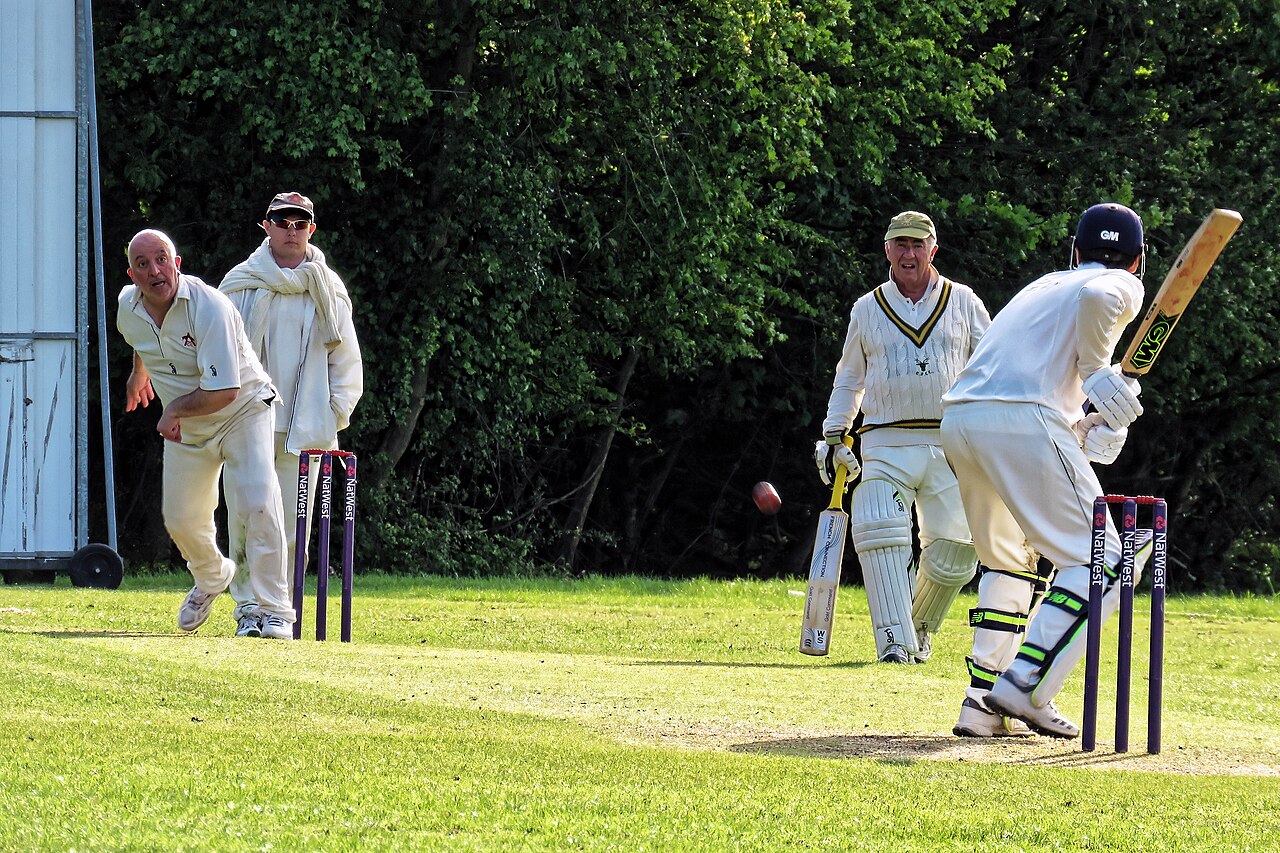
Of all the ways to get a batter out, few are as beautiful or as baffling as wrist spin. A small, slow-looking ball loops out of the hand, dips, and then jags sideways off the pitch in a direction the batter did not expect. Done well, it is cricket's closest thing to sleight of hand — and the deception begins the instant the ball leaves the fingers. This is a guide to what those bowlers are actually doing, and how the best batters try to read them.
Wrist spin versus finger spin
Spin bowling comes in two broad families, and the difference lies in where the revolutions come from. Finger spinners impart turn using — as the name suggests — their fingers, rolling the ball out of the hand. Wrist spinners generate spin from a flick of the wrist and a snap of the fingers, which lets them put ferocious revolutions on the ball and turn it a long way.
That extra spin is a double-edged gift. Wrist spin can be devastating, ripping the ball square across the batter, but it is also harder to control, which is why wrist spinners tend to be more expensive and more attacking than their finger-spinning cousins. The trade-off is simple: more danger, less predictability. A wrist spinner buys wickets with the very variability that also leaks runs.
The stock ball: the leg-break
The bread-and-butter delivery of a right-arm wrist spinner is the leg-break. Released with the wrist cocked and the ball spun so that it rotates from leg to off, it pitches and then turns away from a right-handed batter, towards the slips. This is the ball that beats the outside edge, draws the batter forward, and finds the thin nick to the wicketkeeper or first slip.
The leg-break is called that because it moves away from the batter's legs. For a left-handed batter facing the same bowler, of course, the ball turns the other way — into the body — which is one reason left-handers and wrist spinners make for such an intriguing contest. Everything a wrist spinner does is built around this stock ball; the variations exist to punish a batter who has grown too comfortable playing for the leg-break.
The googly: the ball that goes the other way
The most celebrated variation is the googly, sometimes called the wrong'un. It is a leg-break bowler's masterstroke: a ball that looks like a leg-break out of the hand but spins the opposite way, turning in to the right-hander instead of away. The bowler achieves it by dropping the wrist and turning it over further at the point of release, so that the same broad action produces reverse rotation.
The googly is lethal precisely because it exploits expectation. A batter set up for the ball turning away suddenly finds it darting back towards the stumps, threatening to bowl him through the gate or trap him leg before. Historically, the delivery was a genuine secret weapon; its early exponents caused consternation because batters simply could not tell it apart from the stock ball. Even today, a well-disguised googly is one of the hardest deliveries in cricket to pick.
The top-spinner and the flipper
Beyond the leg-break and the googly lie subtler variations that trade sideways turn for changes in bounce and pace. The top-spinner is spun with the axis pointing straight down the pitch, so the ball does not deviate much off the seam but dips sharply in flight and kicks up higher off the surface than expected. It hurries onto the batter and can take the shoulder of the bat or loop up off the glove.
The flipper is the connoisseur's delivery: squeezed out of the front of the hand with a click of the fingers, it is imparted with back-spin, so instead of bouncing normally it skids on low and fast. A batter expecting the usual loop and bounce plays for a ball that never rises, and the flipper sneaks under the bat to hit the pad or the base of the stumps. It is notoriously difficult to bowl well, which is part of its mystique.
The doosra: finger spin's answer
The doosra belongs to the finger spinners rather than the wrist spinners, but it deserves a place here because it is the mirror image of the googly. Just as the googly is a leg-break bowler's ball that turns the "wrong" way, the doosra is an off-spinner's ball that turns away from the right-hander instead of into him — "doosra" meaning "the other one" in Hindi and Urdu. It gives a finger spinner the same weapon of surprise, and it is fiendishly hard to produce without straining the elbow, which has made it one of the game's more scrutinised deliveries.
The point of both the googly and the doosra is identical: to make the ball do the opposite of what the batter has prepared for, using an action as close as possible to the stock delivery so the change cannot be seen coming.
Reading it from the hand
So how does a batter survive against a bowler with four or five different deliveries, all disguised? The elite answer is to read the ball from the hand — to watch the wrist and fingers at the moment of release and decode which way the ball will spin before it has even pitched. The seam of the ball, the position of the wrist, the angle of the seam in flight: all offer clues to those who have trained their eyes to see them.
Reading from the hand is a rare and prized skill. Many very good batters cannot do it reliably and instead read the ball off the pitch — that is, they wait to see which way it turns after bouncing and react. That works against slower, bigger-turning spin, but it is dangerous against a quick, well-disguised wrist spinner, where there is barely time to adjust. The batters who can pick the googly out of the hand hold a priceless advantage, and bowlers work endlessly on their action to deny them those tell-tale signs.
Flight, drift and dip: the aerial contest
Wrist spin is not only about what happens off the pitch. Much of the deception occurs in the air, before the ball has landed at all. By varying the pace and trajectory, a spinner can loop the ball up to invite a drive, then flatten the next one to hurry the batter. Heavy revolutions can make the ball drift sideways through the air — usually into the right-hander for a leg-break — before it grips and spins back the other way, a double movement that is desperately hard to counter.
Then there is dip: the same top-spin that makes a ball bounce steeply also drags it downwards late in flight, so a delivery a batter judges as full for driving suddenly drops shorter than expected, and the drive arrives too early. This aerial contest — flight, drift, dip and changes of pace — is why watching a great wrist spinner is so absorbing. The ball is being manipulated from the moment it leaves the hand to the moment it hits the bat, or misses it.
Left-arm wrist spin: the mirror image
Everything described so far assumes a right-arm wrist spinner, but there is a rarer and equally fascinating breed: the left-arm wrist spinner, sometimes called a chinaman bowler in older commentary. This bowler's stock ball spins in the opposite direction to the right-armer's leg-break, turning in to the right-handed batter rather than away — effectively the same movement a right-arm off-spinner produces, but generated from the wrist and with far more revolutions.
Because the movement is reversed, so are the variations. The left-arm wrist spinner's "wrong'un" — the equivalent of the googly — turns away from the right-hander instead of into him, again defying the batter's expectation. Left-arm wrist spin is uncommon largely because it is so difficult to control, but when it works it presents batters with an unfamiliar problem, and unfamiliarity is a bowler's friend. Facing a delivery you rarely encounter, from an angle you seldom see, magnifies every ordinary difficulty of picking spin. This is part of why captains prize a wrist spinner of any kind: the sheer rarity of the skill means many batters simply do not get enough practice against it to feel truly comfortable.
The long apprenticeship
Wrist spin is often described as the hardest craft in cricket to master, and the reason is control. A young quick can bowl fast from the start and refine accuracy later; a young wrist spinner must learn to land a ball that is inherently unpredictable, spun so hard that small errors are magnified into wides and long hops. It can take years of patient practice before the deliveries land where intended, and longer still before the variations are disguised well enough to fool a good batter.
That long apprenticeship is why captains and coaches show wrist spinners a particular patience, tolerating expensive spells in the belief that the wicket-taking rewards are worth it. It also explains the deep affection fans feel for the great exponents of the art. A wrist spinner who has mastered flight, drift, dip and disguise has served an arduous cricketing education, and it shows in every teasing over.
Why wrist spin captivates
Wrist spin endures because it is a contest of nerve and cunning rather than brute force. The bowler is slower than everyone else on the field, yet holds the initiative, teasing and probing, setting a trap over several deliveries and then springing it with a ball that looks the same but behaves differently. It rewards patience and courage: a wrist spinner must be willing to be hit for the occasional boundary in pursuit of the wicket-taking ball.
For the watcher, learning the family of deliveries transforms the experience. You begin to guess what is coming, to spot the batter being set up, to appreciate the disguise even as it fools the man with the bat. If you fancy testing how well you know cricket's great spinners from its quicks and its all-rounders, Guess the Cricketer over at crickedle rewards exactly that kind of knowledge — and once you have watched a googly through the eyes of the batter it deceived, you will never see slow bowling the same way again.
Fancy a challenge? crickedle is a free daily cricket guessing game with six modes — a new puzzle every day.
Play today's puzzle →